
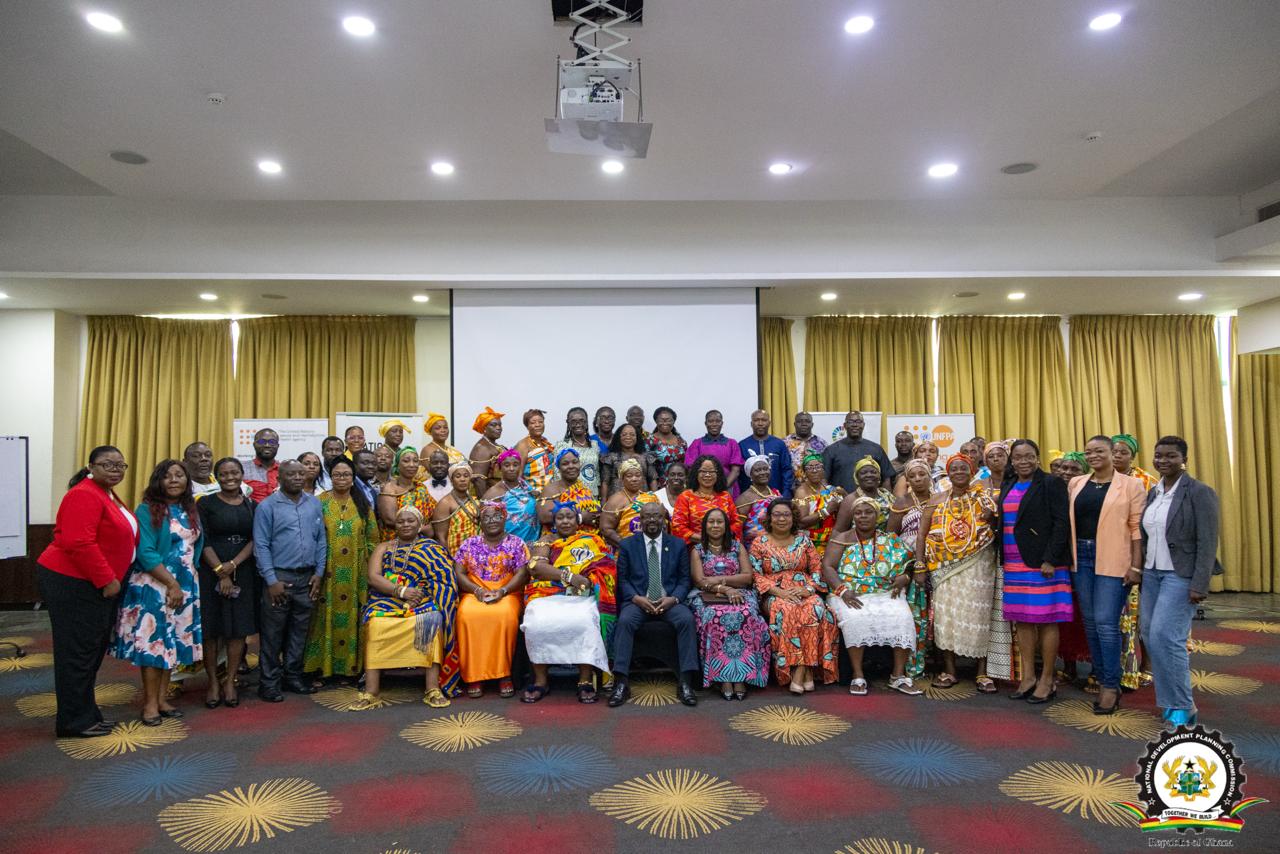
Ghana has renewed its commitment to end preventable maternal deaths following a high-level Presidential Roundtable on Maternal Health convened in Accra under the theme “No Woman Should Lose Her Life to Give a Life.”
The roundtable, organized by the President’s Sustainable Development Goals (SDGs) Advisory Unit in partnership with the United Nations Population Fund (UNFPA) and the National Development Planning Commission (NDPC), brought together government officials, health experts, and development partners to address what speakers described as a “national public health emergency.”
Leadership Reflections, Health and Gender Equality Challenge
 Dr. Agnes Naa Momo Lartey, Minister for Gender, Children and Social Protection, emphasised that maternal mortality reflects deep-rooted inequalities that undermine women’s rights, dignity, and participation in development. She called for collective action from government, traditional and religious leaders, families, civil society, the private sector, and development partners.

Hon. Nana Oye Bampoe Addo, Deputy Chief of Staff who was also the Chairperson for the occasion, acknowledged Ghana’s progress since establishing reliable maternal mortality data through the 2007 UNFPA-supported survey, but warned that nearly 900 maternal deaths in 2025 demonstrate that current efforts are insufficient.
She emphasised that maternal mortality is driven by systemic issues extending far beyond healthcare facilities, including emergency transport failures, blood supply shortages, procurement inefficiencies, and cultural barriers that delay women from seeking care.
While commending initiatives like the expanded National Health Insurance Scheme, the Mahama Care Initiative, and the First Lady’s free health screening programs, Hon. Bampoe Addo called for greater honesty, urgency, and accountability. She urged roundtable participants to develop a clear, actionable roadmap to accelerate reductions in maternal deaths, signaling that incremental improvements are no longer adequate to address this persistent crisis.
Implementation Gaps Driving Preventable Deaths
Representing the Minister of Health, Dr. Hafez Adam Taher emphasised that Ghana has strong maternal and newborn health policies, but implementation gaps—not policy absence—are driving preventable deaths.
Dr. Taher highlighted concerning trends, including over 900 maternal deaths by November 2025, declining skilled delivery coverage, and persistent regional disparities. He identified leading preventable causes:
-
- Obstetric hemorrhage
-
- Hypertensive disorders
-
- Sepsis
-
- Obstructed labor
-
- Unsafe abortion
System drivers contributing to these deaths include workforce gaps at the primary care level, delayed posting of trained midwives, weak mentorship, training quality challenges, and fragile referral and blood supply systems.
He called for immediate, policy-aligned actions: fast-tracking workforce deployment, mandatory mentorship for frontline staff, strengthened emergency referral systems, and rigorous enforcement of Maternal Death Surveillance and Response with clear accountability—emphasizing that “this moment must deliver measurable action, not recurring discussions.”
A Silent Emergency Unfolding Daily
With nearly 900 maternal deaths recorded in 2025 alone—one death occurring every few hours—Ghana’s maternal mortality crisis demands urgent action. The country’s current maternal mortality ratio stands at 301 deaths per 100,000 live births, far exceeding the SDG 2030 target of 70.
UNFPA Country Representative David Wilfred Ochan described the situation as a “silent emergency” unfolding daily in delivery wards, peri-urban communities, and rural areas across Ghana. Despite near-universal coverage of key services such as antenatal care and skilled birth attendance, progress in reducing maternal deaths has stagnated over the past decade.
To address the crisis, UNFPA proposed the Presidential Initiative on Maternal Health Emergency Response, anchored on three pillars:
- Political commitment to treat maternal mortality as a national emergency
- Accountability, including strengthened maternal death surveillance and real-time tracking
- Sustainable financing through increased domestic resources and partnerships
UNFPA reaffirmed its readiness to support Ghana in resetting its approach and accelerating progress toward zero preventable maternal deaths.
Stark Regional Inequalities Persist
A presentation led by the NDPC on the State of Maternal Mortality in Ghana, Analysis of trends from 2010 to 2021 shows that while progress has been made, Ghana still lags behind the global average of 197 deaths per 100,000 live births, and remains far from the SDG 2030 target of 70 deaths per 100,000 live births.
The data revealed stark regional and socio-economic inequalities, with the Upper East Region recording the highest maternal mortality ratio at 465, followed by Volta at 383, while Greater Accra recorded the lowest at 191, With women in rural areas and poorer households facing the highest risks. Weak emergency transport, blood supply gaps, procurement challenges, and harmful social norms continue to delay life-saving care.
A Call for Coordinated Action
 In his closing remarks, Dr. Nii Moi Thompson, Chairman of the National Development Planning Commission and Senior Presidential Advisor on the SDGs, stressed that reducing maternal mortality requires strong political leadership and coordinated action across sectors—including health, transport, social protection, financing, and community systems.
He emphasised that maternal health is foundational to child survival, community wellbeing, and national development.
The roundtable reaffirmed that saving mothers’ lives is a national priority—central to achieving SDG 3 (Good Health and Well-being) and SDG 5 (Gender Equality).
As Ghana charts its path forward, success will be measured not by commitments made, but by lives saved.